Wednesday, June 18, 2014

You really are what you eat

In my first post I hinted at the fact that the food we are eating these days is so far removed from actual food that our bodies don't really know how to assimilate any of what we are actually putting into them. In order to grasp the concept of what organic and natural REALLY means, I think it's important to first understand the difference between what we class as food, and what real food, actually is.

The saying, "You are what you eat" is completely true. Everything that you eat gets used to build the body you have. Your body is constantly regenerating itself and it uses WHATEVER you give it, to regenerate itself. It won't be able to differentiate between an organic apple and a packet of crisps. Your digestive system will break it all down and send it out to be used to build more cells. You can imagine that the apple will provide some stellar fuel for your system, but the crisps? Not so much. More about that in a bit!

Pick me, pick me!


Here's some trivial, but interesting, info! You can lose anywhere from 200 000 to 3 000 000 cells per SECOND. It's difficult to get an exact answer as to how many body cells we lose on a daily basis but the atoms in your body go through a complete turnover about once every 7 years. That doesn't mean you get a whole new body as you hit the 7 year mark;) It means that, by the end of those 7 years, all the cells you started with at the beginning of that 7 year cycle, will have been replaced with new ones. When we are younger, we are making far more cells than we are losing. As we get older, or we get sick, we are making fewer cells than we are losing and that's how you notice the aging process beginning to happen. We see the result in the wrinkling of our skin, the greying of our hair, the loss of muscle and strength etc.  

Now let's go back to the apple and the crisps... Nutritionally, I think even the most hardened junk food addict will have to admit that the apple wins hands down! We all know a packet of crisps isn't going to win any nutritional food prizes;) But what difference does it really make to your life if you eat the crisps instead of the apple? It's food either way, right? Your body can use it for energy and it all goes out the same way doesn't it? Not quite...

Those crisps aren't ACTUALLY food. I mean, they LOOK like food because we've been told our whole lives, that they ARE food and so our brains are programmed to put them under the food category. But they aren't actually slices of a healthy, organically grown potato that was grown in a field that provided it with nutrients. The flavours are far from real. They're a mish mash of ingredients made by scientists using test tubes and machines. You only have to look at the ingredients to know that they are so far removed from what real food is, it's actually quite frightening.

Rennet of Calf?! I'm sorry... What?!
Someone very clever took all of that stuff, put it in pretty packaging and marketed it as food. They made it look so good and sound so healthy to us that we were convinced enough to slot those crisps into the food category and make them part of our daily intake. They are so full of all sorts of things specifically designed to appeal to our tastebuds that our minds go, "Ooooh, that tastes like food!"  The scary thing is, we totally ignore the process that goes into making them and what they look like before they are zapped full of colorants and flavorants. They will look and taste nothing like the end product and I can guarantee they have no real food in them. They were probably grey in color to start, before they were bleached and then smothered in colorants and synthetic spices! I mean, what food do you know of that is called E-330?! It sounds like a robot in Star Wars more than something that should be in your food. Seriously, the mind is an amazing thing. We can convince ourselves to not even ask questions about where those crisps come from because the marketing campaign was so good we've bought into the propaganda.
Who wants to be a simba chippie now?!
This may sound like an exaggeration but it does make you think, or it should! Don't ever believe that something is healthy or good for you based on marketing. There are NO companies who exist only for your health and well-being. They are all trying to make money and they will say just about anything to take that money from you, even if they've twisted the truth. Crisps are not, and never will be, real food, unless you make them yourself, from scratch.

So, what you think is food, is NOT food. Not even close. It's difficult to grasp that, especially since the marketing behind everything is so GOOD!

Alright then, what else can you class as not real food? Well here is where things can get overwhelming. Most of what we eat these days is not real food. The amazing thing is, real food is at our fingertips, but we have been so programmed over the years, to eat and drink certain things, that we can't see the raw honey for the corn syrup! I challenge you to go into your  kitchen and look through your cupboards and sort out what is real food and what isn't. Basically, anything processed in a factory can be classed as not real food. That will include pretty much anything refined, that is in a box or a packet.


Here are some examples: White flour, sugar, biscuits, chips, sweets, packet sauces, bottled sauces, 2 minute noodles, anything in a tin, white rice, bread, dry pasta, cereals etc. You get the idea? None of that stuff is real food. It's something made by scientists, in a factory. That means you can't be sure of what's in it. Even if you read the ingredients, there are things they are not obligated to tell you. And they conveniently don't have to tell you HOW it was made. Believe me, it's not made in a kitchen with a cook standing next to a stove adding real ingredients. It's made by people in white coats, wearing big rubber gloves, in a production line of machines and who knows how many machines and people it has bypassed on its journey to that packet. Contamination anyone?


And there is NO love going into that "food". No matter how much the marketing tries to convince you it's all about YOU and what's good for you, I promise you, it's not. It's all about what lines their pockets. They have some really clever words to hook your interest! They say things like "lower in fat" and "new improved formula" and "added fibre" and our minds are programmed to recognize those as good things and we blindly take them off the shelf because that's what we've done for so long and that's what our parents did and probably their parents.

But I'm guessing their parents grandparents DIDN'T. Before factories existed on a large scale, people bought from the local grocer who was supplied by small farmers who grew things naturally, before pesticides became the norm and genetically modified crops took the place of real crops and food was made by scientists and big machines in bigger factories.

They ate REAL food. And they died more from old age and natural causes than awful diseases and they weren't obese and heart disease wasn't even thought of. Did you know very few people died of heart disease before 1900? It was barely a whisper back then. Now it's the number one killer. The same goes for cancer. A by-product of our so-called "civilization".

You know, now, what not real food is! But what is real food? This one is easy:) It's anything that is literally REAL FOOD. If it was grown in a field, the natural way, without pesticides and chemicals to make it grow faster or out of season, it's real food.

Um, if you need that mask then you probably shouldn't be spraying that on our food?!

If it's meat or eggs or milk from an animal that has been allowed to range free and eat it's natural food rather than genetically modified grains, that hasn't been pumped full of hormones to make it grow faster, and antibiotics to try and cure the horrible diseases it gets from being held in such cramped, unhealthy quarters, it's real food.

Exactly how healthy and ethical is this?!

That's it.

I can practically hear you all saying, "That's IT?! The list was far longer for processed foods! What are we supposed to eat?!"

Actually, a lot! I, for one, only eat real food and yet I never go hungry. I can vouch for loads of people who do the same, and they don't go hungry. Not only do they not go hungry but they don't gain weight, they don't get sick, they don't have dread diseases and they are just all round happier, healthier people.

That is definitely enough food for thought for one post;) I am going to leave you there, but not for long!  This blog is going to be ALL about what you SHOULD be eating and all the deliciously yummy food you can make and eat knowing that it is all ethical, healthy and REAL. Can anyone say "Banana bread?!" Yes please!

Watch this space;)

Monday, June 9, 2014

Monday Mix-up - Sabbatical time


This is just a quick note to tell you that I will be taking a short break from my blog for the month of June. There is a VERY good reason. I am busy writing exams as well as trying to finish my thesis. Those who have done this at any time in their lives know that EVERY minute is precious and, since work is still carrying on in the midst of all the chaos, I have to grab minutes where there previously were none.

Just to make sure you still have reading material 3 times a week, I will be re-posting some of my more popular blogs instead of typing new ones, until 30 June. I know a lot of you only started following my blog recently so this will be a great way to catch up on all you've missed:)

I wish I didn't have to do this because I will miss posting! I always enjoy doing it. I never seem to run out of topics because I find them all so interesting and I hope you do to!

Until 30 June, keep warm and stay green and healthy!

Friday, June 6, 2014

Real Food Friday Feast - Wholesome chicken soup

Chicken soup conjures up childhood memories of lying in a bed with the flu and clutching a bowl of it just under our chin to spoon as much of it into our mouths as possible while mom fusses around us tucking in blankets and generally being a mom;) There is really no greater comfort food on a cold winter's night, (very much like tonight with temperatures hitting the minuses!) especially if you are feeling fluey.

In ancient times, it was believed to have medicinal properties but modern scientists have never fully deciphered the reasons until now. Apparently it's not just an old wive's tale that chicken soup is a good remedy for colds and flu. Dr. Stephen Rennard, a pulmonary expert at the University of Nebraska Medical Centre in Omaha, found evidence that chicken soup contains anti-inflammatory properties that may help prevent the miserable side effects of a cold.

The theory is that chicken contains an amino acid called cysteine which thins out the mucus in the lungs making it easier to cough it out and clear all the passages. Hot chicken soup vapours have been proven more effective than hot water vapours for cleaning out the mucus in your nose as well.

If we consider what else goes into a chicken soup, carrots are a big part of it and they are an excellent source of beta-carotene. The body converts this into vitamin A, and vitamin A helps prevent and fight off infections by strengthening the white blood cells that fight off bacteria and viruses. Onions are also often a main ingredient and they contain quercetin, which is a powerful antioxidant that is also a natural anti-histamine and anti-inflammatory. If you are a garlic fan and you put it in your chicken soup you are going to get an extra boost. Garlic is a seriously powerful bug fighter and a powerful, natural antibiotic. It also builds up the immune system and prevents you from getting sick more often.

So let's get to the chicken soup already! You can feel free to choose different vegetables, or change the amounts. This is just what I used because I love lots of veggies in my chicken soup but you can play with it:) Needless to say all of these ingredients need to be organic and choose non-irradiated spices as well.

Wholesome chicken soup

1 whole, free range chicken
1 litre bone broth
1 onion
2 garlic cloves
4 carrots
6 baby marrows
6-8 patty pans
1 cup chopped spinach
2 celery stalks
1 tsp peppercorns
1 tsp cumin
1 tsp coriander
2 tsp salt

Method
  • Place chicken in a large pot
  • Slice up 2 carrots, 1 celery stalk and the onion and place in the pot
  • Add the salt and peppercorns
  • Cover with cold water (probably around 8 cups or so) and bring to the boil
  • Turn down to a simmer and leave until chicken is cooked through and starting to fall off the bone
  • Remove the chicken from the broth and place on a plate
  • Remove all the bones (this is a tedious job but it's worth it! Remember to keep all the bones to make more bone broth later)
  • Slice all remaining vegetables and add to the broth
  • Add garlic, chickpeas, cumin and coriander 
  • Add the chicken meat
  • Add the extra litre of bone broth
  • Cover and bring to the boil
  • Turn down to a simmer and leave to cook for about 45 minutes
  • Serve!
Using the water that you cook the raw chicken in ensures that you will be getting the benefit of the antioxidant, cysteine. It also gives the broth a delicious flavour and makes the finished product taste so wholesome and delicious. I guarantee you will want to try this one over the chilly weekend!

Stay warm!

Wednesday, June 4, 2014

Wellness Wednesday - Golden milk for aching joints

I am little harsh on my joints. I train hard and I train often. I always have. I especially love to lift heavy weights. As much as exercise is good for your joints, I know they have taken a beating over the years. I never used to pay any attention to warming up, cooling down or stretching and that has played a BIG part in it. I've learnt a lot since then and all of those are now a permanent part of every training session but unfortunately, some of the damage has been done.

Fortunately, I have found a natural remedy that is just perfect for my achy joints. It's also perfect for you if you suffer from osteoarthritis or rheumatoid arthritis or any illness that attacks your joints. If you just train a lot like I do, and put your joints under a lot of strain, this is definitely for you.

The key ingredient in golden milk is turmeric. You've probably heard of it. It's a golden/orangey colour spice that is used predominantly in indian cooking. 

It's also been used in ayurvedic medicine for thousands and thousands of years. If you buy it from a grocery store you're probably accustomed to it looking more yellow in colour. That's because it's been heat-treated and stripped of all of its natural goodness and is about as nutritious as beach sand.

If you are going to use turmeric for anything, you really want to make sure you buy organic, non-irradiated turmeric. (this actually applies to ANY spice) You will find it here if you're based in Jhb or here if you're anywhere else in South Africa. Dischem also sells some non-irradiated spices but check the label carefully because some of them LOOK more natural but actually are irradiated.

The ingredient in turmeric that gives it so much healing power is curcumin. Research has shown that it has 150 potentially therapeutic properties. Here are some of the benefits:
  • Anti-inflammatory
  • Lubricates joints
  • Antioxidant
  • Antiseptic
  • Analgesic
  • Anti-fungal
  • Anti-bacterial
  • Boosts immunity
  • Anti-carcinogenic
  • Helps maintain cholesterol levels
  • Promotes digestive health
  • Liver detoxifier
  • Regulates metabolism and weight management
  • Lowers high blood pressure
  • Improves memory and brain function
  • Helps various skin conditions
  • Helps various neurological disorders
  • Lowers Triglycerides
So many good reasons to drink this stuff and guess what? It tastes great! It's actually a fantastic drink to have just before bed. You will sleep like a baby while the turmeric works its magic on your body:)

When I make my golden milk I also add organic, ground black pepper. The reason for that is that black pepper enhances curcumin’s bioavailability by 2000%. As good as curcumin is for you, there is one problem with it. It has low levels of bioavailability. That means that most of the curcumin that you eat is metabolised before your body can absorb it and it ends up not doing much good. An ingredient in black pepper called piperine helps make curcumin more bioavailable for your body. Studies found that when curcumin was ingested, it had no effect. However, when piperine was added to curcumin the bioavailability increased by 2000%! So, if you can handle a slight burn, it's definitely worth adding the black pepper.

I also add a bit of ginger and cinnamon to my golden milk because these spices also have loads of good, healing benefits. Read more about those here. If you don't like them, simply leave them out. I find they make it even more delicious.

How to make golden milk

First you need to make the turmeric paste:


Ingredients:

1/4 cup ground turmeric
1/2 teaspoon of ground pepper
1 teaspoon ground ginger
1 teaspoon ground cinnamon
1/2 cup of filtered water

Method: (hint: wear an apron if you are wearing clothes you'd like to hang on to. Turmeric stains like nothing on earth)
  • Mix all ingredients in a small pot
  • Mix well
  • Turn the heat to medium and stir constantly until the mixture is a thick paste
  • Add a little more water if it's too thick (you should still be able to pour it out of the pot, not scrape it out)
  • This doesn't take long so don’t walk away from the pan or it will stick and burn
  • Let your paste cool and then keep it in a small jar in the fridge (it will keep for about 3 weeks in the fridge)
Using turmeric paste to make golden milk:

Ingredients:

1 cup of milk (You can also use coconut milk, almond milk, goat's milk or soy milk but make sure it's organic soy because most soy is genetically modified these days)
1 tsp coconut oil
¼ or ½ tsp of turmeric paste (this depends on how strong you can handle)
Raw honey (or some other natural sweetener)

Method:
  • Combine all the ingredients, except honey in a small pot
  • Turn the heat to medium
  • Stir constantly and don't allow the mixture to boil. It will taste burnt but also, cleaning it up if it boils over will be horribly messy. Your stove top will be yellow for weeks!
  • Pour golden milk into a mug
  • Add coconut oil
  • Add honey to taste
  • Drink
There are many different recipes for golden milk and it really comes down to taste. The spices you add will depend on what you like. The types of oil you use are also up to you. A lot of recipes use sesame oil. I've really struggled to find organic, cold-pressed sesame oil and, since I always have coconut oil in my kitchen, it works for me.

If you have arthritis or joint issues, or things like back pain and neck pain, I'd recommend drinking this at least twice a day. If you just want to use it as a tonic for all the other benefits you get from it, once a day just before bed is perfect. It's great for kids too. They will love it, it's really good for them, PLUS it will give them a good night's sleep!

Monday, June 2, 2014

Real Food Friday Feast - Chickpea soup


This is undeniably one of the yummiest soups I have ever made! It's like hummus flavoured soup. The bonus is that it's not just yummy, it's so good for you as well. It's thick and creamy and full of flavour and goodness. Here's why!

Chickpea benefits:

  • Loaded with fibre: Like other beans, Chickpeas, are rich in soluble and insoluble fibre. Soluble fibre forms a gel-like substance in the digestive tract that grabs onto bile (which contains cholesterol) and escorts it out of the body. Research has shown that insoluble fibre not only helps to increase stool bulk and prevent constipation, but also helps prevent digestive disorders.
  • Full of protein: Chickpeas are a good source of protein for people who prefer to avoid meat and dairy products.
  • Contain manganese for energy production: Chickpeas are an excellent source of the trace mineral manganese, which is an essential cofactor in a number of enzymes important in energy production and antioxidant defences. One cup of chickpeas supplies 84.5% of the daily recommended allowance for this mineral.
  • High iron content: The high iron content of chickpeas will boost your energy levels, particularly if you are a woman and menstruating, pregnant or breast feeding. It's also fantastic for the healthy development of children. Iron is an integral component of hemoglobin, which transports oxygen from the lungs to all body cells, and is part of key enzyme systems for energy production and metabolism.
  • Stabilises blood sugar and has a low GI (glycemic index): Soluble fibre helps stabilise your blood sugar levels. If you have insulin resistance, hypoglycemia or diabetes, chickpeas can help you balance blood sugar levels while providing you with steady, slow-burning energy. They have low GI value of 28 – 32 which is helpful for weight loss and energy levels.
  • Heart healthy: Eating chickpeas regularly can lower LDL (bad) and total cholesterol. They contain significant amounts of folate and magnesium. Folate lowers the levels of the amino acid, homocysteine and strengthens the blood vessels. Studies have found chickpeas lower the risk of heart attack.
  • For Women: Chickpeas contain phytochemicals called saponins, which can act as antioxidants. It may lower your risk of breast cancer, protect against osteoporosis and minimise hot flushes in post-menopausal women.
All very good reasons to eat chickpeas in any way, shape or form. Something important to note about chickpeas is that they are legumes. (yeah so?!) Legumes, like nuts, should never be eaten without first being soaked and/or sprouted.

Nuts and legumes have their own built in protection mechanism and eating them without soaking and sprouting them is going to, in the longterm, do more harm than good for your system. The protection mechanism found in legumes comes in the form of phytic acid. Phytic acid makes nutrients like phosphorous unavailable for your body. It attaches itself to the minerals ensuring that your body can't digest them. Phytate also inhibits important enzymes that we need to help us digest our food. A diet that is high in unprepared nuts and legumes leads to tooth decay, nutrient deficiencies, lack of appetite and digestive problems. 

That is why you need to properly prepare your chickpeas. I buy them dry at the organic market in Bryanston but you can get them at other places too. It's very easy to prepare them. 
  • Quarter fill a glass jar with dry chickpeas
  • Top up with water
  • Add a tablespoon of lemon juice or apple cider vinegar
  • Leave to soak for about 12 hours or overnight
  • Drain the water and leave the jar upside down to drain properly
  • At this point you can cook with them but, if you really want to get all the goodness out of them, leave them to sprout for another 12 hours (that's optional though)
Once your chickpeas are ready, you can make your soup!

Chickpea soup

2 Tbs olive oil/coconut oil/duck fat/butter
1 large onion, roughly chopped
2 garlic cloves, finely chopped
1 teaspoon ground coriander
2 teaspoons ground cumin
1/4 teaspoon cayenne pepper (optional)
2 sweet potatoes, roughly chopped (I don't peel them but you are welcome to)
2 large carrots, roughly chopped
1.5 litres bone broth
300g soaked chickpeas
1 Tbs lemon juice

Method
  • Heat oil in a large pot over medium heat. 
  • Add onion and garlic
  • Cook for  about 3 minutes, stirring often
  • Stir in coriander, cumin and chilli powder
  • Stir together for about 1 minute
  • Add sweet potato and carrot
  • Cook and stir often, for about 5 minutes
  • Add bone broth and put the lid on 
  • Bring to the boil
  • Turn the heat to low and simmer, stirring occasionally, for 20 minutes
  • Add chickpeas to soup and simmer, covered, for 15 minutes or until chickpeas are soft
  • Blend soup until smooth. 
  • Season with salt and pepper
  • Stir in 1 tablespoon lemon juice
  • Serve!
I guarantee this will be a winter meal you will keep returning. I have made in twice in the last 2 weeks it's just so warming and yummy! Enjoy!

Wednesday, May 28, 2014

Wellness Wednesday - Why we should ALL be eating our greens

I think many parents have had dinner table "discussions" with their kids about the green "stuff" on their plates and why they have to eat it. I could get into a discussion (and I have in the past) about how kids are often fed all of the wrong kinds of foods which actually makes them focus far more on the blandness of some vegetables and turn vegetables into a kind of punishment. They become accustomed to added sugars and processed and refined foods and they crave those far more.

But this post isn't just about kids eating their greens. What I find is that parents will tell their kids they need to eat their greens all the while shoving pizza in their own mouths. Besides the fact that no child is going to feel compelled to eat their greens simply because "they're good for you", when their parents are eating pizza for dinner, there's also the fact that parents seem to think they are immune to the need for greens, themselves.

But why is there such a fuss about greens? According to Dr Elson Haas, author of  Staying Healthy With Nutrition, "The leafy greens are probably the richest in nutrients of any foods in the vegetable kingdom."

Greens balance out the healthy animal foods, like grassfed meats, organ meats, eggs, & raw dairy. Greens are cleansing foods, while animal foods are nourishing foods. Greens are good detoxers, which is vital and necessary for our immune system, and every cell in our bodies.

Here are some other benefits that we get from greens. They are:
  • Full of vitamins
  • Full of minerals
  • Full of chlorophyll, which is the compound responsible for harnessing the sun’s energy and making it into food & energy for the plant
  • Full of enzymes (only if they're raw or fermented)
  • Full of phytonutrients
Let's talk about those phytonutrients a bit more because most people get a bit confused when they hear that word. Phytonutrients are plant chemicals which are developed by the plants to protect themselves from things like insects, animals, and even UV rays from the sun. If WE eat those phytonutrients, they protect us as well. There are WAY more phytonutrients than normal nutrients (like vitamins, minerals, proteins, carbohydrates & fats) in plants. In fact, we're talking 10,000 to 1!

There are literally thousands of them. Hundreds of them are responsible for the colour in our food alone. In fact, phytonutrients are responsible for the colour, smell, and taste of our food. Chlorophyll is a phytonutrient and it harnesses the energy of the sun and turns it into chemical energy, as well as giving the plant its green pigment.

Aside from providing us with the colour, taste and smell of plants, they also provide us with the following benefits. They are:
  • Antioxidant
  • Antibiotic
  • Antiviral
  • Cancer preventative
  • Anti-inflammatory
  • Tissue protective
  • Immunosupportive
  • Immune stimulating
The more variety of greens you add to your diet, the more variety of nutrients & phytonutrients you’ll be eating which will really boost your body's immunity. You don't need to eat piles and piles of spinach and kale either. Just by adding a few different herbs to your diet you are already increasing your exposure to all of the available nutrients. Here are some examples of greens you can easily add to your diet:
  • Stinging nettle (which can be bought at dischem in the form of a herbal tea)
  • Parsley
  • Basil
  • Thyme
  • Rosemary
  • Oregano
  • Chives
  • Dill
  • Coriander
  • Cilantro
  • Mint
  • Spinach
  • Spring Onion
  • Sprouts
  • Dandelion (which can also be bought at dischem in the form of a herbal tea)
  • Cabbage
  • Swiss Chard
  • Spinach
  • Kale
  • Leafy green lettuces
  • Watercress
  • Rocket
See how easy it is to add these things to your diet? You could sneak quite a few tasty herbs into a dish and no-one would be any the wiser as to how many nutrients they just consumed;)

It's important to note that it's vital that you use good quality greens, in other words, go organic. You don't really want to waste money on conventionally grown greens. The reason for this is because plants develop their phytonutrients in response to their natural environment of insects, pests, animals, and UV rays. The more we spray crops with pesticides and strip their environment of diversity (as in mono crops), the less phytonutrients they will develop, the less nutrition you will be getting. (aside from the amount of chemicals you'll be ingesting)

If you're stuck on how to use greens in your kitchen to boost your immune system, here are some ideas:
  • Season your cooking with green leafy spices like basil, thyme, rosemary, parsley, chives, oregano, mint, & dill. A really easy way to do this conveniently and cheaply (while also being reassured that it's organic)  is to have an indoor herb garden. Here are some tips on what to grow, and how to grow them during winter. Add your fresh herbs at the end of cooking so you don't overcook them lose the valuable nutrients.
  • A Daily Salad, with endless options for combinations. Salads shouldn’t be boring but most people think they are and just forget about them. Try this one on for size. It's delicious and very filling!
  • Smoothies and juices. Mint is a herb that compliments most smoothies. I have been known to add parsley and basil to my smoothies too. A little bit goes a long way! Feel free to add all sorts of leaves and herbs to your smoothies. The only thing I'd go easily with is cruciferous vegetables like cabbage, cauliflower, broccoli etc as well as things like kale and spinach. I'll blog about that soon so I can go into more detail about them.
There you have it. Go forth and consume lots and lots of greens:)

Friday, May 23, 2014

Real Food Friday Feast - Roasted Stuffed Butternut

Butternuts are such a versatile vegetable. You can roast them, make them into soup, mash them with a bit of salt and butter or throw them in a stew or curry. Kids love them because they're colourful and sweet. Because of their unusual shape, they can really make a table look interesting if you decide take advantage of that and stuff the skins with all sorts of yummy things.

It actually doesn't matter how you eat them, as long as you do:) Because they are exceptionally good for you! Here's why:
  • Carotenoids: Butternut is one of the best sources of four carotenoids: alpha-carotene, beta-carotene, lutein and zeaxanthin. The body converts alpha- and beta-carotene into retinol, which is the form of vitamin A needed for healthy eyes and skin. Lutein and zeaxanthin are the only carotenoids found in the retina. They are powerful antioxidants and may also prevent age-related problems like cataracts and macular degeneration. 
  • Antioxidants: Aside from those mentioned above, butternut contains several other antioxidants. Just to recap, the purpose of antioxidants is to neutralise free radicals and prevent them from damaging healthy cells and causing inflammation that leads to chronic illnesses. Butternuts contain the powerful antioxidant, Vitamin E. Because it's fat-soluble and an antioxidant, it's able to protect lipids that perform important roles. for example, forming the structure of cell walls. Vitamin C is a water soluble vitamin so it's free to move throughout all the fluids in your body, where it neutralises a whole bunch of different free radicals, including those that harm your skin cells.
  • Fibre: Butternuts contain both soluble and insoluble fibre. Just so you know the difference: Insoluble fibre adds bulk to digested food and helps it to move through your digestive tract smoothly. It's kind of like a scrubbing brush. It helps clean you out;) Soluble fibre slows down the absorption of carbohydrates and that prevents large spikes in your blood sugar after you eat meaning it can help to prevent type 2 diabetes.
  • Minerals and Electrolytes: Electrolytes are minerals that break down into molecules that can carry an electrical charge through body fluids. They stimulate muscle contraction and nerve impulses. They also control the movement of fluids in and out of your cells to make sure your body maintains the correct balance. When you are dehydrated, doctors usually prescribe Rehidrate which most of us have used at some or other time in our lives. It contains loads of electrolytes which help put your body back in balance. Butternut actually provides your body with three important electrolytes: potassium, magnesium and calcium. Potassium activates the electrical impulses that regulate your heartbeat and stimulate muscle contraction. Magnesium and calcium work opposite each other. Magnesium relaxes cardiovascular muscles, while calcium stimulates their contraction. All three are essential.
There you have it. Several really good reasons to eat butternut. The soup is delicious, but since I've already posted about that, let's look at another, very tasty way to enjoy this nutritious vegetable. Needless to say, all of the ingredients should be organic to get the most nutritional benefits out of them.

Roasted Stuffed Butternut

1 large butternut (try choose one with a really nice shape since you will be using the skin for decoration)
1 small onion
1 garlic clove
1 tomato
1 cup chopped mushrooms
1 Tbs butter or duck fat or coconut oil
1/2 tsp cumin
1 tsp salt
1 cup bone broth
1/2 cup grated cheese
Sprinkle of parsley
Method
  • Preheat your oven to 180°C
  • Scrub the skin of the butternut (this means you can even eat it if you want)
  • Wrap it in tinfoil and place in the oven for about half an hour
  • Remove from the oven and CAREFULLY cut it in half without messing up the skin (I do this because it's easier to cut but also because, if you cut it fully cooked, it will be so soft the skin will likely tear and totally mess with your design;)
  • Wrap each half back in the tinfoil and place back in the oven for another half hour or until both are soft
  • Remove from oven
  • Place a frying pan on the stove and turn onto medium heat
  • Add the duck fat/butter/coconut oil
  • Chop up the onion and garlic and add to the pan
  • Fry for 2-3 minutes
  • Add the mushrooms, tomato, cumin, salt and bone broth and cook for 2-3 minutes
  • Going back to your butternut, scoop out the seeds and throw them in your compost heap (I'm being very optimistic here:) 
  • GENTLY scoop the soft flesh of the butternut out and add to the frying pan mixture. Get as much as you can without breaking your skins. This part is very delicate and I've been known to shed a tear when the skin tears so go carefully;) As you can see from my picture, mine aren't entirely stable. (That's because I got distracted with work and overcooked them...)
  • Set the skins aside and mix up your butternut with the other ingredients
  • When everything is mixed completely, remove from heat
  • Turn your oven onto GRILL
  • Gently scoop your mixture into the skins until they are full
  • Sprinkle grated cheese over the top of each butternut half
  • Sprinkle some parsley over the cheese
  • Place in the oven under the grill for about 5 minutes or until the cheese is melted
  • Enjoy!
Even if the skin tears and its look isn't going to win you any prizes, I guarantee the taste will make it a winner in your friends and family's eyes;)

Wednesday, May 21, 2014

Wellness Wednesday - Superbugs vs antibiotics. Who will win the fight?

Apologies for not posting on Monday! I was sick in bed with a nasty bout of flu. I haven't been hit that hard in a long time! I put it down to the travelling I was doing and a total lack of sleep for several days in a row. Plus it's really hard to eat properly on the road. Even if I stick to real, healthy food, it's seldom organic and free range and, thanks to my IBS, my body doesn't take that so well! Put all that together with the fact that both my mom and sister were sick, AND I spent a lot of time around them, and you have a perfect breeding ground for a virus.

So, I have been out of sorts since last Wednesday, but FLAT on my back since Saturday evening and only finally managed to drag my body back to my desk today. Despite the flu being great content for a health blog, I STILL wasn't sure of what to post about today until I heard a discussion on Talk radio 702 this morning in the healthy lifestyle slot, about antibiotics and superbugs. It also has a lot to do with the flu, and there was my topic for the day:) I know that I've spoken about this before, but, to be honest, I don't think it can be spoken about enough. Especially since things have reached crisis level around the world with the World Health Organisation finally making the distant fears, a current, and very scary reality.

An article released on New Scientist yesterday has been receiving a lot of attention today. This is how it begins:

"A post-antibiotics era in which common infections and minor injuries can kill, far from being an apocalyptic fantasy, is instead a very real possibility for the 21st century."


It sounds overly dramatic but I can assure it, it isn't merely sensationalism on the part of the journalist. This is straight from the World Health Organisation's website, WORD FOR WORD.

The problem has now become so urgent that, this week, the World Health Organisation's 194 member states are meeting in Geneva, Switzerland, to endorse a proposed action plan to SAVE antibiotics. Part of the plan is to find a new way to research and market future antibiotics.

There isn't big money in antibiotic research. At the moment, because profit is dependent only on the amount of antibiotics sold, the research and marketing of these medications is powered by marketing alone, and how many sales can be made. When money alone is the focus, that is NEVER going to lead to responsible use of antibiotics.

A big problem is also that older antibiotics are obviously still around. They're off-patent, which means that cheaper, generic versions can be made and they end up taking the place of the more expensive ones. So the newer ones have to be priced lower, even though they cost more to research and make, and that means that, the only way for the companies to recoup their costs is to sell in VERY large quantities. Unfortunately, the more antibiotics that are out there, the faster the development of resistance becomes.

Because of the lack of money in antibiotics, companies have gradually stopped researching and making them. In fact, only two new classes of antibiotics have been brought to the market in the last 30 years and many medication developers have left the field. That's pretty scary when you think of all the new superbugs out there and how ineffective our current antibiotics are becoming. We need constant, and new research to prepare us for the onslaught of the superbugs that have ALREADY developed.

There are many reasons that bacteria are developing more and more resistance to antibiotics. The main ones being the fact that they are administered too readily, and that there is simply too much of them out there for us to be exposed to, and another one being that people don't take them correctly. I'm sure you've all taken antibiotics at some point in your life, and you've been told by your doctor to finish the course? The problem is that a lot of people don't listen to that because they don't know the importance of it. They start to feel better and they think they've taken enough to beat the bug and they put them in their medicine cupboard for the next bout of flu.

Let's just put aside the fact that antibiotics don't work against flu viruses, for now, and talk about a bacterial infection. If you don't finish the course of antibiotics, and some of the bacteria survive, they will have the time to build up a resistance to that antibiotic which will make it as effective as a sugar tablet the next time you get the same infection. And you WILL get the same infection again, because that bacteria is still alive in your system.  But this time it will be worse. Then you'll have to go back to the doctor and get a different antibiotic to try and fight off that stronger bug. If you don't finish THAT course, the cycle continues.

I don't understand why doctors don't really STRESS the importance of finishing a course. I think they should actually TELL people why. It's a general rule we all seem to know but no-one knows why really. It takes on "Fish-wives tale" status and that means it's a rule that can probably be disregarded. But honestly,  if you are going to mess around with something as strong as antibiotics, then you need to act responsibly, especially as a doctor. Patients are less likely to act responsibly regarding medication than doctors are (although sometimes I wonder about that...) I think a big part of the problem is that, as with most things in life, people become complacent. They have forgotten just how powerful antibiotics are. They are taken for granted and treated like headache pills. Nothing could be further from the truth. Those pills are what stand between us and a return to a post-antibiotic era where something as small as a cut could lead to an infection, and death.

Not finishing the course of antibiotics, and being exposed to so many of them via our meat supply, will all lead to the same result: an antibiotic resistant group of superbugs. Even without these issues to deal with, all living organisms, bacteria included carry resistance genes for self-defence. One good thing is that those defences suggest there are plenty more potential antibiotics out there, if someone would just take the time to develop them. We've only touched the tip of the iceberg with antibiotics. Existing antibiotics come from the 1% of soil microbes we can culture. That means there's a whopping 99% still left to explore. Imagine the possibilities.

The World Health Organisation says that we especially need antibiotics that target specific bacteria, instead of broad-spectrum antibiotics that attack all the bacteria in your body. That ALSO promotes resistance. It messes further with your health because your body NEEDS the good bacteria. Killing them all means you are left with no defence whatsoever.

This is just SOME of what we have in store for us if we don't start acting responsibly now:

  • Multi-drug resistant tuberculosis (MDR-TB) is growing. Existing drugs for TB cure only about half of those treated for MDR-TB. Only one new antibiotic has been introduced in 40 years, despite global efforts.
  • MRSA, or methicillin-resistant Staphylococcus aureus, has been joined by a staph that resists another last-resort antibiotic, vancomycin. Livestock reared using antibiotics can develop MRSA infections. These strains can spread among humans, as shown by recent human cases in Denmark even though it has banned antibiotic growth-promoters in livestock.
  • CRE, or carbapenem-resistant Enterobacteriaceae, is a group of gut bacteria that resists carbapenems, which are last resort antibiotics. One set of CRE genes was first seen in India in 2009 and has since been found around the world. The bacteria can cause urinary tract infections, and the resistant strain is making this widespread ailment untreatable.
  • Gonorrhoea, a sexual infection also known as "the clap", is becoming increasingly resistant to antibiotics. Untreatable cases have emerged.

Scary stuff folks. You may be saying, "Well, the World Health Organisation is on it so why should we worry? You know how these things can go. It could take months, or even years for them to hash it out and decide how money can still be made while doing the minimum requirement to make things "better".

It's up to us to start being responsible:
  • Stop expecting, and requesting, antibiotics when you go to the doctor. Ask for a blood test to check if it's bacterial or viral. It's your right, as a patient, to get the best healthcare you can. How can you know for sure what it is without the right tests? Medical aid will cover it so just take the tests. If your doctor says it's not necessary, fire them and move on to the next one. There are so many out there.
  • If your doctor simply offers you antibiotics without you even asking, tell him you'd like to know more about your illness before taking them, and his reasoning behind giving them. "Covering all the bases" isn't a good enough reason for him to give. You want solid proof. Again, if you don't like his reasoning, fire them and move on.
  • If you start a course of antibiotics, FINISH THE COURSE no matter how healthy you feel.
  • Always take probiotics when you've had antibiotics to try and restore some balance to your colon and put the good bacteria back.
  • Stop eating meat and dairy products that contain antibiotics. That will allow bad bacteria to build up more resistance. Stick to free range and organic meat and dairy.
For me, first prize is to avoid those antibiotics altogether. But I also know that there is a time and a place for them. If you are gravely ill, with a bacterial infection, THAT is the time and place. Never for flu virus, never as a preventative measure and never if you are not sure what you have. 

Don't be scared to question your doctor. They are not gods, they are just people. Fallible people. And sometimes they need to be reminded of what their job is actually about. Remind them.

Friday, May 16, 2014

Real Food Friday Feast - Apple Puff Cake


With Autumn comes loads of apples, and since my fridge is full of them, I decided another apple dish was in order! Something about winter just makes me crave warm, sweet desserts and this one can definitely provide both of those criteria.

Since I listed all of the health benefits of apples in last week's post, I won't go into all of those details again. I'll simply get right to the point and give you the recipe!


Apple Puff Cake

2-3 apples of your choice. If you want this dish to be nice and sweet I would recommend using anything Granny Smith apples.
¼ cup butter
3 eggs
¼ cup chickpea flour
½ cup milk
1½ Tbs honey
1 tsp cinnamon
½ tsp bicarb
1 tsp vanilla extract
½ tsp xantham gum (not essential, just gives it a nicer texture)
Pinch of salt

Use this vanilla extract and not the fake stuff you get at most grocery stores. Dischem sells this.
Method
  • Preheat your oven to 230°C
  • Core your apples, throw them in a food processor and chop them up
  • Add the butter to a pan
  • Throw in the apple and sauté until it starts to get soft, then add 1 Tbs honey and ½ tsp cinnamon and mix
  • While the apples are cooking, add the milk, vanilla extract and eggs to a bowl and beat until smooth
  • Add the flour, ½ tsp cinnamon, ½ Tbs honey, bicarb and salt to the egg mix and beat until smooth
  • Add the apples mix to a pie dish and spread them out evenly
  • Pour the batter over the apples (don't worry if some of the apples peek out. The batter will sort that out) If you want, sprinkle some cinnamon on top. I did just for fun:)
Looks like a melk tart but it isn't!
  • Pop in the oven for about 20 minutes or until the batter is baked (poke a knife into it and when it comes out clean, it's done)
  • Serve immediately to enjoy the steaming heat
If the dish is too dry for you, why not add a little home made custard? If you prefer vanilla custard, just leave out the chocolate in the recipe. I made this custard a few weeks back for a lunch and the bowl was practically licked clean;) I know the two of these recipes will go very well together.

Have a scrumptious weekend:)

Thursday, May 15, 2014

Wellness Wednesday - Children who eat junk food have lower IQs

Life is crazy and busy. There are so many mouths to feed and just not enough time to get everything done. Popping through a drive-through seems like the easiest and most convenient way to make sure the kids are fed while still having enough time to squeeze in a few other errands because you didn't have time to cook dinner. It's a catch 22 situation that most parents are caught up in, because, while you may have saved yourself a few minutes of time, you're contributing to a lifetime of complications for you and your family.

A recent study undertaken by an academic at Goldsmiths, University of London, found that parents with a higher socio-economic status gave their children meals prepared with fresh, real ingredients more often, which had a positive affect on their IQ. The study showed that lower socio-economic status was associated with more children having fast food, and this led to a lower IQ.

Dr. Sophie von Stumm of the Department of Psychology at the University of London said: “It’s common sense that the type of food we eat will affect brain development, but previous research has only looked at the effects of specific food groups on children’s IQ rather than at generic types of meals.” 

Let's face it, if you can afford to pay for someone to help look after your kids and run your house for you, or you are a stay at home mom because one salary is enough to keep your family going, you will have time to cook proper meals for your family. But in households where both parents are working, or where there is only a single parent trying to work 2 jobs to make ends meet, cooking dinner is a luxury that simply doesn't exist. Fast food is going to the obvious choice and what child will argue with that? What if I told you it's a proven fact that those children score lower on intelligence tests and they often struggle in school?

Even if parents are managing to cook decent meals for their kids at home, all of that hard work is often undone once the kids are at school. Schools in less privileged areas don't really go out of their way to help feed kids a balanced diet. Tuck shops are full of things like burgers and french fries and hot dogs and loads of junk like crisps, chocolates and sweets. If the school has a cafeteria, it is stocked with all of the wrong kinds of foods. A friend of mine went to fetch her child from school and happened to arrive as they were having their afternoon snack. That snack consisted of a sandwich with hundreds and thousands on it!! On what planet is that nutritious for a child?!

Yes I mean these things!
People seem to have the misconception that, as long as a child isn't hungry and has a full tummy, they are doing fine. Nothing could be further from the truth though. Freshness and quality of food matters so much more than just being full, especially when children are young and developing. The lack of wholesome food is going to have a lasting effect on those kids and THAT is going to greatly affect their future. 

Another study done in Australia at the University of Adelaide, published in August 2012, showed that toddlers who eat junk food grow less smart as they get older. In this study, the diets of 7000 children were examined at the age of 6 months, 15 months and 2 years. When the children were examined again at age 8, those who were eating a lot of sweets, fizzy drinks and other junk food had IQs up to 2 points lower than children eating a wholesome diet.

That may not seem like a huge amount but it is actually. Kids who are even SLIGHTLY slower at school not only get left behind, but also get picked on and bullied by other kids. That is going to lead to a lifetime of lowered self-esteem and insecurity. Besides, imagine those kids after another 10 years of eating junk food? They are going to be distinctly disadvantaged by the time they are a teenager and even more so as they reach adulthood. The situation isn't going to improve unless the diet does.

An American study showed that children who eat junk food such as pizza, chips and biscuits before the age of 3 will likely end up having lower IQs than children who eat home-cooked meals with fresh fruits and vegetables. These children were tested 5 years later and had IQ scores that were as much as 5 points lower than their healthier-eating peers. A big problem is that, the effects of eating junk so early in life can't be changed by future healthy habits because brain development has already been hindered, so you need to start them being healthy from very young and keep them there.
Those early developmental years are SO important. It can't be stressed enough. Yet those are the years that parents seem to think they can feed their kids anything, as if it doesn't really count because they have such a high metabolism they burn it off anyway. It's not about what makes kids fat. It should NEVER be about what makes anyone fat. It should be about what makes them healthy and gives them every advantage they need to get as far as they can in life.

Next time you consider a drive through, take a detour instead to the fresh food section of a grocery store and feed your child some fruit instead. It's not only cheaper, but it will have a long lasting, positive effect on your child.

Friday, May 9, 2014

Real Food Friday Feast - Grain free apple and cinnamon mini-muffins

It's been a while since we had any baked goods in our house simply because time has been limited the last few weeks. Well, I had a craving, I knew my food post was due today and I decided to experiment:)

The reason I made mini-muffins is simply because I have more of those trays than I do the normal size ones. It has nothing to do with trying to limit calories, I promise;) Though these little babies have only 49 calories per muffin so you can eat them with a clear conscience. They are also grain free which makes them extra good for you.

Why apples? Well, I currently have a fridge-full because I'm making lots of apple cider vinegar while apples are in season! They're also yummy and go so well with cinnamon. But there are a few other reasons why I chose apples:
  • Scientists from the American Association for Cancer Research have found that eating flavonol-rich apples could help reduce your risk of developing pancreatic cancer by up to 23%. Researchers have identified several compounds in apple peel that have potent anti-growth activities against cancer cells in the liver, colon and breast. But, just in case you were wondering, the whole apple ALSO has a benefit. It has been proven to reduce the number and size of mammary tumours in rats so that's a really good sign for humans too!
  • A new study performed on mice shows that drinking apple juice could keep Alzheimer’s away and fight the effects of ageing on the brain. In the study, the mice that were fed an apple-enhanced diet showed higher levels of a neurotransmitter called acetylcholine and they did better in maze tests than those on a regular diet.
  • Red apples contain an antioxidant called quercetin. Recent studies have found that quercetin can help boost your immune system, especially when you're stressed.
  • The soluble fibre in apples is good for SO many things: 
    • It helps to decrease your risk of diabetes
    • It helps protect against parkinsons
    • It helps reduce cholesterol
    • It makes your heart healthier
    • It prevents gallstones
    • It prevents both constipation and diarrhoea
    • It controls your weight
Seems mom was right! An apple a day keeps the doctor away;)

Without further ado, here is your recipe:

Grain Free Apple and Cinnamon mini-muffins


Ingredients

1 large egg (free range)
2 Tbs plain yogurt
4 Tbs melted butter
1 Tbs raw honey
1 apple (chopped or grated, or just stick it in your food processor for a few seconds)
3/4 cup chickpea flour
1/2 tsp bicarb
1 tsp cinnamon


Method
  • Preheat your oven to 180°C
  • Into a mixing bowl add the egg, yogurt, butter, honey and apple
  • Blend together well
  • Add flour, bicarb and cinnamon
  • Blend together well
  • Butter your trays
  • Use about a tablespoon of mixture for each muffin depending on the size of your tray
  • Bake in oven for 10 minutes
  • Enjoy!
Quickest dessert ever! Of course, you can also make these into big muffins. Double the recipe if you want more of them.

I will be in Durban until Tuesday so Monday's post won't be happening I'm afraid but I will be back in action on Wednesday!

Have a wonderful weekend!

Wednesday, May 7, 2014

Wellness Wednesday - Why making your mark is so vital

Today is voting day in South Africa. Millions of people have been making their way to polling stations all over the country to make their choice for provincial and national government for the next 5 years. It's an important day in the history of our country. Important because our democracy is still so young. Until 1994, only a select few were allowed to vote at all. But it's also important because our young democracy seems to have taken a bit of a turn for the worse over the last few years and the people's voice, once again, needs to urgently be heard.

What does this have to do with Mellow Health? Well, I think it has everything to do with it. We are currently sitting with a government so deeply buried in corruption that it's actually forgotten the difference between right and wrong altogether. Every wrong doing is followed rapidly by machine gunfire excuses. The offenders receive a rap on the knuckles publicly and a pat on the back privately and the corruption continues unabated.

While the fat cats in parliament continue to take money from our beautiful country and all of its people, they are also completely oblivious to the needs of our country, and, by that, I mean, the land. Sustainable living is so far removed from their understanding that it's not even a pinprick of a thought for them. If they can't look after the people, how will they ever start to look after the land, not to mention our beautiful wildlife.

Our animals are being slaughtered right under our noses: canned lion hunting, rhino poaching and elephant poaching are rife, and those are just the animals that are highly publicised. The people talking about these things and actually taking action are NOT the government. They are private companies and individuals who care enough to take matters into their own hands.

South Africans have learnt to do things themselves if they want something done. Wait for the powers that be to take a stand and you will be waiting a very long time. But is that really how it should be? I don't think so. That is why today is such an important day. There are many who have decided it's a waste of time to vote but, to those people I say, "Shame on you." If you choose NOT to make your mark then you have no right to sit and complain about the state of our country. You may think you are just one person, but there are thousands just like you. If those thousands all actually voted, they would be a force to be reckoned with.


Honestly, I hate politics. I think that most politicians are self-absorbed, arrogant megalomaniacs that only know how to spin and blow hot air;) Unfortunately, however, this is the way the system works and you can either fight against it eternally, or go with it. I choose to go with it because there is always the chance that it could make a big difference. Surely ONE of those megalomaniacs must also have good intentions!? So I weigh them all up and choose the lesser of several evils;)

When I start to think about what a waste of time it might be, I think about all of the things that I personally want for this country. I want to see an end to poverty and starvation and suffering. But I think the pathway to that lies in sustainability, in taking climate change seriously, by taking away all the power from the big corporations, and encouraging organic and free-range, sustainable farming. I want a government that doesn't simply supply food to the masses, but rather teaches them how to grow it themselves so that they will always have the ability to feed themselves and others. I want to see people being educated about the effect their carbon footprint has on our environment and wildlife and being forced to make sustainable changes. As long as we have a government that is completely self-absorbed and setting the wrong example, we will have citizens who feel they can do the same. I think it's time that changed.

Some people may think I'm nuts. There are bigger things in the world to worry about. That's your opinion and that's fine. This is mine. I don't agree. I think that, without a planet, nothing else will be relevant anymore. Without a safe place to live, we won't be around long to enough to worry about anything else.

So I am going to vote and hope that it makes that little bit of difference necessary to force the powers that be into doing the things I think are important and relevant to our survival, not just for South Africans, but for every living creature around us.

I hope you all will do the same.

Monday, May 5, 2014

Monday Mix-up - Why, and how, to use re-usable shopping bags

They jokingly call the plastic shopping our "national flower". It's not a very funny joke actually, when you think of all the havoc it wreaks on our environment. If you are anywhere near a river in Johannesburg, those bags are literally hanging off trees lining the rivers, by the thousands. I'm not exaggerating. It's not just ugly, it's killing our wildlife and poisoning our environment.


It boggles my brain that someone can buy a chocolate bar and ask for a shopping bag to put it in. Yet that's what people do. Why can't they carry it in their hand? Or put it in a pocket, or their handbag? People just seem to have NO idea the damage they are eventually going to do to the environment by purchasing that pointless bag. Plastic doesn't biodegrade. Once it's made, it's here to stay. Even if you use it as a rubbish bag, it's still going to be around the next several hundred years. I'm only talking about one bag. People buy those things by the thousands.

This is how quickly they add up. Now multiply that by millions... Am I the only person who finds that thought really scary? Once I became aware of the damage I was doing to the environment by buying them, I made a decision a few years back that I was no longer going to. I was going to use my own bags. It was a bit of a slow process getting it right!

For weeks I would either forget them on the dining room table, after purposefully taking them out for shopping, or I'd forget altogether to take them out, or I'd put them in the car and then only remember them at the till! It takes a while to form a habit. I think it takes longer when you aren't that driven to help the habit form. At the time I decided to take my own bags I will still pretty uninformed about the environment so, while I really wanted to be good about it, I wasn't as focused as I could have been.

That's changed thank goodness! These days I carry my bags with me everywhere. They are now old and rather ratty, very well travelled bags and they are made up of all sorts. Any bag I find, or am given gets turned into a shopping bag if it suits the purpose! I also carry a very large handbag for the rare days when I don't have a shopping bag handy. Anything small gets thrown in there. GLM and I have been known to walk through a shopping centre balancing piles of things in our arms, just to avoid having to buy bags and add more plastic to the world. Bless her heart, she never complains;)

This is something very small that you can do to help ease the pressure on our planet just a bit. Set an example. Carry your reusable bags with pride. Flaunt them for all the world to see when you get to the till. If it makes the person in front of you just A LITTLE bit guilty, and they end up not buying a bag, so much the better!

Here are some tips to help you get the shopping bag thing right:
  • Make sure you leave home with enough bags: I often used to make the mistake of only taking 2 bags and then running out of space and having to buy 2 or 3. Rather have more than less. Take at least 5 of them with.
  • Keep the bags in the car, not the house: If you keep them in the house, guaranteed you will forget them. I seem to have formed enough of a habit now that I grab them from the kitchen cupboard almost without thinking, but, while you are getting into the habit, keep them in the car!
  • Keep bags in ALL your cars: Okay, most people don't have more than 2;) But just in case! That way, if you are out in your spouse's car and need to buy something, you aren't forced to buy a bag.
  • After you unpack your shopping, put the bags BACK in the car: It's amazing, but, in the this crazy, busy world, our heads are so full of things to do that you can forget from one minute to the next, what you had planned to do. That's why we've got a thing in our house. If you say, "I MUST do such and such before we go," we both say, "Do it NOW!" Because if we don't, we'll forget for sure. So, don't even hesitate, unpack, and head straight to the car, do not pass begin, do not collect $200;)
  • Have bags for different things: Packing meat with veggies just isn't going to go down well. You especially don't want meat packed in a thin, material bag. So make sure you have bags that suit the various things you are buying.
  • Finally, don't forget to wash the bags now and then: They gather lots of bacteria over the weeks and you ARE carrying food.
There you go! Easy as pie:)

Friday, May 2, 2014

Real Food Friday Feast - Lamb neck casserole

We were in Durban this past weekend and the weather was still so lovely and warm, so it was a real shock to the system when we arrived back in Johannesburg on a VERY chilly Tuesday evening and realised winter was here! It's somehow worse when you've spent 4 days with gorgeous weather.

Winter is the time of year when we crave all sorts of comfort foods. It's also usually the time of year where we shrug our shoulders in acceptance of the 5kgs we will invariably gain over the next 3 or 4 months.

If you read my blogs often, you all already know that the weight gain shouldn't be an issue, but the TYPE of foods you eat, should be. I have posted MANY options for healthy meals that, I think, would definitely be called comfort food! They're tasty, some even decadent but ALL good for you.

This post is no different. It's also a first for me because, for more than 12 years I didn't touch lamb. I couldn't eat it. It always made me sick. However, thanks to 2 years of eating clean, organic, chemical-free food, I seem to able to eat a lot of what I never used to be able to as long as I keep it clean. So I decided to try free-range lamb and I discovered that I could eat it quite easily. Boy, was that a happy day:)

My mom actually put me on to lamb neck casserole. In case you hadn't noticed, lamb is rather pricey... (sarcastic much?!) However, lamb neck is definitely more affordable and it also has nice chunks of meat on it if you don't mind eating around the bones. The nice thing about the bones is you can add them to your pot of bones when you're making bone broth and they add a delicious flavour.

So, let's just quickly discuss the benefits of a lamb casserole made with free-range, grass-fed lamb:
  • When we talk about omega-3 fats, we straight away think of nuts and seeds as a source on the plant side of things and fish on the animal side. But did you know that you also get an impressive amount of them from grass-fed lamb? The content will depend upon the diet of the sheep, but if they are purely grass-fed, your lamb will have a decent amount of omega-3s. In some countries without access to a coastline and fish, lamb has been shown to provide more omega-3s than any other food in the diet. In Australia, where lamb is eaten a lot by both children and adults, recent studies have shown that lamb ranks among the top omega-3 foods in their daily diet. Grass-fed lamb averages about 25% more omega-3s than conventionally fed lamb and as much as 49% more ALA (alpha-linolenic acid, the basic building block for omega-3s)
  • If you've tried to lose weight at any time of your life, you've probably heard of Conjugated linoleic acid or CLA. It's an omega-6 fatty acid that has quite a number of health benefits. We usually don't bother with omega-6s because the average adult consumes too many omega-6s in comparison to omega-3s, but there are many health benefits for increased amounts of individual omega-6 fatty acids. What's REALLY interesting is that CLA is not JUST an omega-6 fatty acid. It's also a trans fatty acid. Yes, I know. Those things are EVIL! However, it seems that CLA is the exception to the rule about omega-6s and trans fats. There is an increasing number of studies that show that CLA is associated with improved immune and inflammatory function, improved bone mass, improved blood sugar regulation, reduced body fat, and better maintenance of lean body mass and guess what? Recent studies show that grass-fed lamb contains nearly twice as much CLA as conventionally fed lamb. 
  • Lamb is an great source of iron. An average portion can provide 20% of the recommended daily intake for men and 12% for women. The iron found in lamb meat is in a form that's easily absorbed by the body. Iron in your diet is vital for the formation of red blood cells.
  • Lamb meat provides 45% of the daily requirement of zinc, essential for growth, healing and a healthy immune system. Like iron, the zinc found in lamb meat is more easily absorbed by the body than zinc found in other sources.
  • It's a great source of B vitamins which are essential for metabolic reactions in the body. It can provide over 100% of the daily requirement of B12 and is also a good source of thiamine.
  • Trace elements such as copper, manganese and selenium are also found in lamb
  • Lamb is a very fatty meat. We know this. But half of that fat is unsaturated and most of that unsaturated fat is monounsaturated, which is the kind commonly found in the healthy 'Mediterranean-type diet'. That being said, you know my thoughts on saturated fat. I don't believe it's bad for you either. All the same, it's nice to know you're getting the benefit of different types of fat by eating lamb.
The key is to make sure that the lamb you buy is grass-fed. That means buying it from a reliable source, in other words, not a grocery store. Free-range doesn't always mean the animals were allowed to roam free and eat grass.

So, how do you make lamb casserole? Well this is my way. You'll find a lot of recipes tell you to fry the lamb in some oil in a pan first but I prefer not to do that. I find it makes the lamb quite tough. Slow cooking them in an oven makes the lamb extremely tender. It also soaks up all the flavours in the bone broth which makes it absolutely delicious. It should go without saying that all of these ingredients need to be organic and free-range to really get the full benefit of this as a healthy comfort food.

Lamb neck casserole

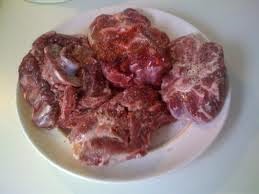
This is what lamb neck looks like
1 kg lamb neck
1 shallot or half an onion
2 garlic cloves
1 litre bone broth
4 large potatoes (or sweet potatoes)
4 large carrots
2 cups whole mushrooms
A few sprigs of rosemary (dried will also do fine)
Salt and pepper
2 tsp ground coriander


Method
  • Preheat your oven to 150°C
  • In a roasting pan pour the bone broth
  • Add all the herbs, spices, salt and pepper
  • Mix together
  • Chop and add garlic, onion, potatoes, mushrooms and carrots
  • Leave the lamb in whole pieces and add to pan making sure it's all covered by bone broth
  • Add one or two more sprigs of fresh rosemary if you have it
  • Put the lid on and place in the oven for about 3 hours
  • Serve!
Enjoy and have a wonderful weekend!